Wiesn 2026 in Munich: tent hours, the 2025 visitor count and a day plan that beats the crowds
What Munich locals call the Wiesn, everyone else calls Oktoberfest. This page covers the day on the grounds: when each tent opens and stops serving, how 2025 turned out, the hour it gets full, and what a day that avoids the crowds looks like.
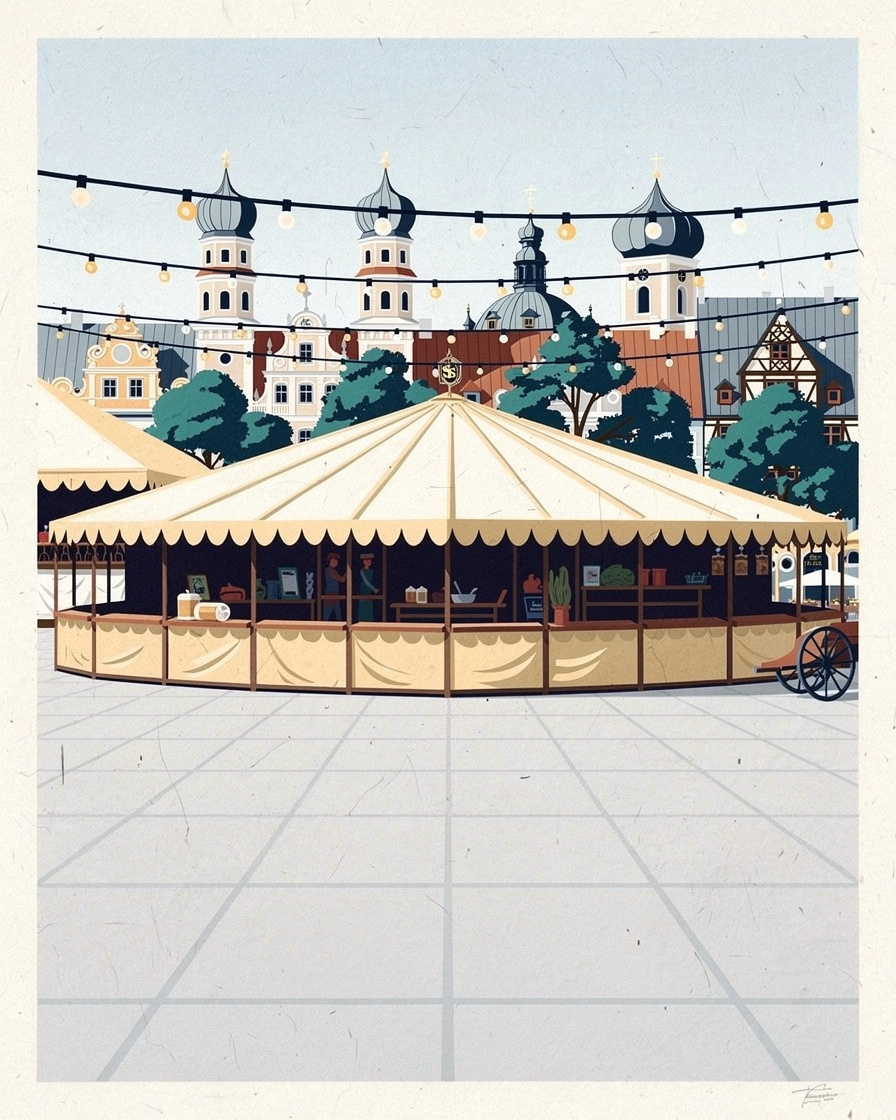
"Wiesn" is the Munich word for Oktoberfest, short for the Theresienwiese, the meadow where it takes place. People who search for the word rarely want the history: they want the day itself, with tent hours, peak times, costs, and when you can still get in.
That is what this page covers, with a year and a source for every figure. Dates, prices and reservations are on the page about Oktoberfest Munich 2026 with dates and prices; this page builds on it.
When is the Wiesn in 2026?
From Saturday 19 September 2026 to Sunday 4 October 2026, on the Theresienwiese. The rule behind it: the festival starts on the Saturday after 15 September and ends on the first Sunday in October, extended to 3 October when 1 or 2 October falls on that Sunday.
In 2025 the Wiesn ran 20 September to 5 October 2025, and in 2023 it lasted 18 days instead of the usual 16. For 2023 and 2024, the city's current reports only give duration and visitor numbers, not the exact days; the dates follow from the rule.
Which hours apply in the tents, and which on the grounds?
Three times matter: when a tent opens, when it stops serving, and when the grounds close. Travel sites like to boil this down to "Sunday to Thursday 10am to 11:30pm, Friday and Saturday 10am to midnight". That is not wrong, but it hides the early weekend opening and the end of beer service.
| Day | Grounds | Large tents open | Last beer |
|---|---|---|---|
| Monday to Thursday | 10am to 11:30pm | 10am | 10:30pm |
| Friday | 10am to midnight | 10am | 10:30pm |
| Saturday | 9am to midnight | 9am | 10:30pm |
| Sunday | 9am to 11:30pm | 9am | 10:30pm |
The small tents serve until 11pm. Käfer's Wiesn-Schänke and Kuffler's Weinzelt are the only exceptions: they serve until 12:30am and close at 1am. If you want a drink after 10:30pm, you have exactly two addresses, and both are packed.
On the opening Saturday the tents open at 9am, but beer is only served after the ceremonial tapping at noon. According to muenchen.de, the Oide Wiesn (the historic section) opens daily 10am to 11:30pm; the city's brochure gives 10am to midnight for Friday and Saturday. Both come from the city, so we show both.
If you stay in the Weinzelt until 1am, you need a bed you can reach without a night bus. Within walking distance of the Wiesn, rooms cost €300 to €500 a night during the festival, near a U-Bahn (underground) station €200 to €350 a night, and on the edge of the city under €200 a night. The places to stay in Munich on Wiesn dates can be filtered by location, with cancellation terms in view.
Compare places to stay for the Wiesn →Affiliate link: a booking through this link supports the site, at no extra cost to you.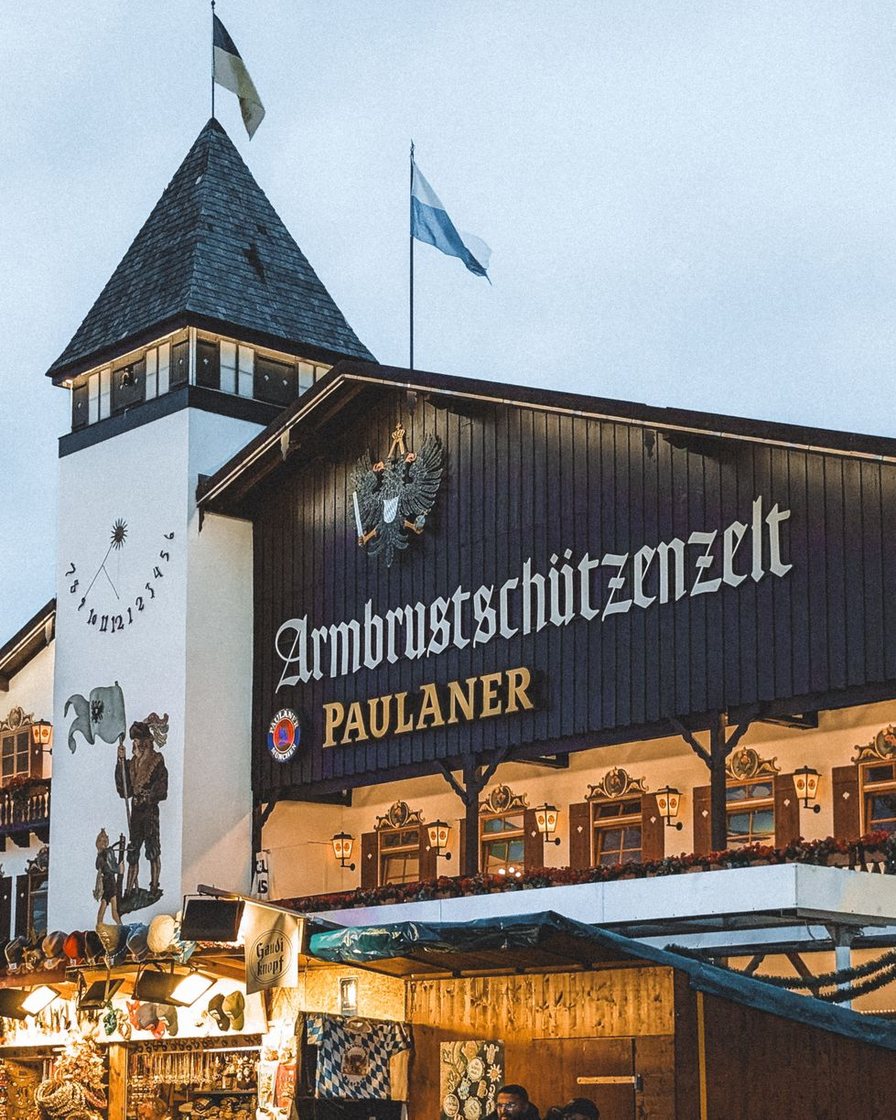
How did 2025 turn out?
The city counted around 6.5 million visitors over 16 days, after 6.7 million in 2024 and the record of 7.2 million over the 18 days of 2023. The figures come from the preliminary reports of the city's Department of Labour and Economic Development.
Numbers fell at the Oide Wiesn: 430,000 visitors in 2024, then 360,000 in 2025 according to the report PDF. The "Facts and records" page on muenchen.de gives 373,083 paying guests for 2025 instead. We could not resolve the difference, so both figures stay.
The tents poured around 6.5 million Mass (the one-litre mug), and food sales rose by 5 to 6% in the large tents and 3 to 4% in the small ones. The report also mentions the grounds closing on the second Wednesday, without the extract giving the reason.
How crowded is it, and when?
No one publishes a measured visitor curve by the hour. What guidebooks and tent landlords consistently report can still be put into a grid that is good enough for planning.
| Time of day | Monday to Thursday | Friday | Saturday and Sunday |
|---|---|---|---|
| 9am to 11am | empty, seats without a reservation | quiet | already busy, but seats to be found |
| 11am to 3pm | filling up, tables turn over | full from midday | full, queues outside the large tents |
| 3pm to 6pm | full inside the tents | some doors close from 4pm | large tents close their doors |
| 6pm to 10:30pm | full, entry uncertain | peak, no entry without a reservation | peak, no entry without a reservation |
By weekday: Monday to Wednesday are the quietest days, unless there is a public holiday. Tuesday is family day with reduced prices on the rides, so there are many children on the grounds but less crush in the tents.
Thursday is the transition. From 5pm on Friday the peak begins, and the last Sunday is one of the busiest days of the whole Wiesn.
What does a Wiesn day that avoids the crowds look like?
The plan rests on the grid above, not on statistics. It assumes a weekday, Monday to Thursday; at the weekend only the variant below works.
- 9:45am: arrive on the U4 or U5 at Theresienwiese station, or walk from Munich Central Station (Hauptbahnhof) in 15 to 20 minutes. The checks at the entrance take minutes at this hour, not quarter-hours.
- 10am to 1pm: the large tent. A seat without a reservation, a Mass at €14.80 to €15.90 according to the official 2026 list, half a roast chicken, and the band already playing.
- 1pm to 3pm: rides, while the queues are short. If you want to see the Oide Wiesn, entry is €4, and it gives you the quietest two hours of the day.
- From 4pm: leave the grounds before the tents close their doors. The evening belongs to the city; at that hour there is no tent seat to be had without a reservation.
At the weekend only the early shift remains: into the tent at 9am on Saturday or Sunday, stay until noon, then the rides, and leave at 2pm. Everything after that is queuing. If you want an evening in a tent, reserve months ahead or let it go.
For the order of a whole weekend, with travel times between the Wiesn, the old town and neighbourhood festivals, see the weekend plan for Munich.
What is free, and what costs money?
The grounds and all the tents are free to enter; only the Oide Wiesn charges €4 for adults, with children up to age 14 free. The city counts more than 100 rides and stalls, and each ride charges separately.
According to the city, a Mass costs €14.80 to €15.90 in 2026; travel sites quote €16 to €17. A full evening in a tent with food, drinks and rides comes to 50 to 80 euros per person according to the guides, depending on what you consume. That range comes from guides, not from an official figure.
The tents handle table reservations themselves, in exchange for food and drink vouchers. Tour operators sell packages combining a table, a room and travel; they are convenient, but nobody publishes a comparison between package price and booking direct. How reservations work in detail is on the Oktoberfest overview page.
For an evening without a tent: city walks, brewery visits and day trips can be booked one by one and can usually be cancelled free of charge until shortly before. The activities and tours in Munich show duration, language and price up front, which you can weigh against an evening queuing outside a tent.
See activities in Munich →Affiliate link: a booking through this link supports the site, at no extra cost to you.
What sets the Wiesn apart from other beer festivals?
Size, first of all. Six to seven million visitors per edition, while other folk festivals in Germany draw far fewer: one source says a few hundred thousand to around a million, another one to four million. Even the generous count leaves the Wiesn standing as the largest folk festival in the world.
Then the way it is run. The city organises the festival itself, only Munich breweries may serve, and no other folk festival has anything like the Oide Wiesn, a separate historic area with its own admission. The festival goes back to the wedding of Crown Prince Ludwig and Princess Therese in 1810; the meadow bears her name.
Which data is missing?
- Visitors per day and per hour. The city publishes totals per edition, not a curve. The grid above is experience, not measurement.
- Waiting times and turned-away guests. Nobody publicly measures how long you queue for a ride or how often a tent shuts its doors.
- The exact dates of 2023 and 2024 in the current reports: they give duration and visitors, not the days.
- The number of tents in 2026 in the reports: the city mentions "large and small tents" and more than 100 attractions; the exact count is on the tent pages, not in the reports.
- Revenue in euros. The reports count visitors and litres, not takings. The figures that circulate are private estimates.
Further reading
Dates for the last three years, prices and reservations in detail are on the page about Oktoberfest Munich 2026. A single tent, with its hours and its speciality: the Ochsenbraterei.
Getting there without a car: MVV tickets and zones, and if you do drive, read the comparison of Park and Ride sites first. Your room by location and price: where to stay in Munich.
Sources
Sources: muenchen.de (Oktoberfest 2026, opening hours, facts and records, Wiesn report 2025), oktoberfest.de (tent opening hours, what is new in 2026), the city's brochure on munich.travel, in-muenchen.de.
Also: City of Munich Department of Labour and Economic Development, preliminary report 2025 (PDF, in English); munichtourism.org and muc-blog.com for how busy each day is; foodtour.info and discover-oktoberfest.com for the cost ranges. Research as of 12 September 2026.
Frequently asked questions
When is the Wiesn in 2026?
Until what time is beer served at the Wiesn?
When is the Wiesn least crowded?
How many visitors did the Wiesn have in 2025?
How much does the Oide Wiesn cost?

Katharina Obermeier
As a student, Katharina waited tables in a festival tent for four Wiesn seasons and knows the times when you can still find a seat without a reservation. She writes about the Oktoberfest without folklore and without disdain. She never recommends a time slot she has not experienced herself.