A weekend in Munich: can you fit the Wiesn and the old town into two days?
For most people, a weekend in Munich means the Wiesn plus as much of the city as possible. This page shows how a two-day plan actually works out, with real walking times instead of straight lines on a map.
A weekend in Munich with Oktoberfest can be planned, but only if you split it into one day for the Wiesn and one day for the old town. Anything more ambitious collapses under waiting times, closed doors and underestimated walks.
This page sets out a two-day schedule, with the times guidebooks usually leave out: how long a tent visit really takes, how far apart the sights in the centre really are, and what to cut first when time runs short.
How many days does a Munich weekend with the Wiesn really need?
At least two full days, which usually means three nights: from Thursday or Friday evening to Sunday or Monday. If you are flying in, that is the minimum stay to plan around. Guidebooks say "at least two days" for the Wiesn plus the city, which in practice splits into one day mostly at Oktoberfest and one day mostly in the centre and the park.
The rest of the time goes on getting around, tiredness and queues, not on extra sights. Plan for that and you are less likely to come home disappointed than someone with a list of seven sights for two days.
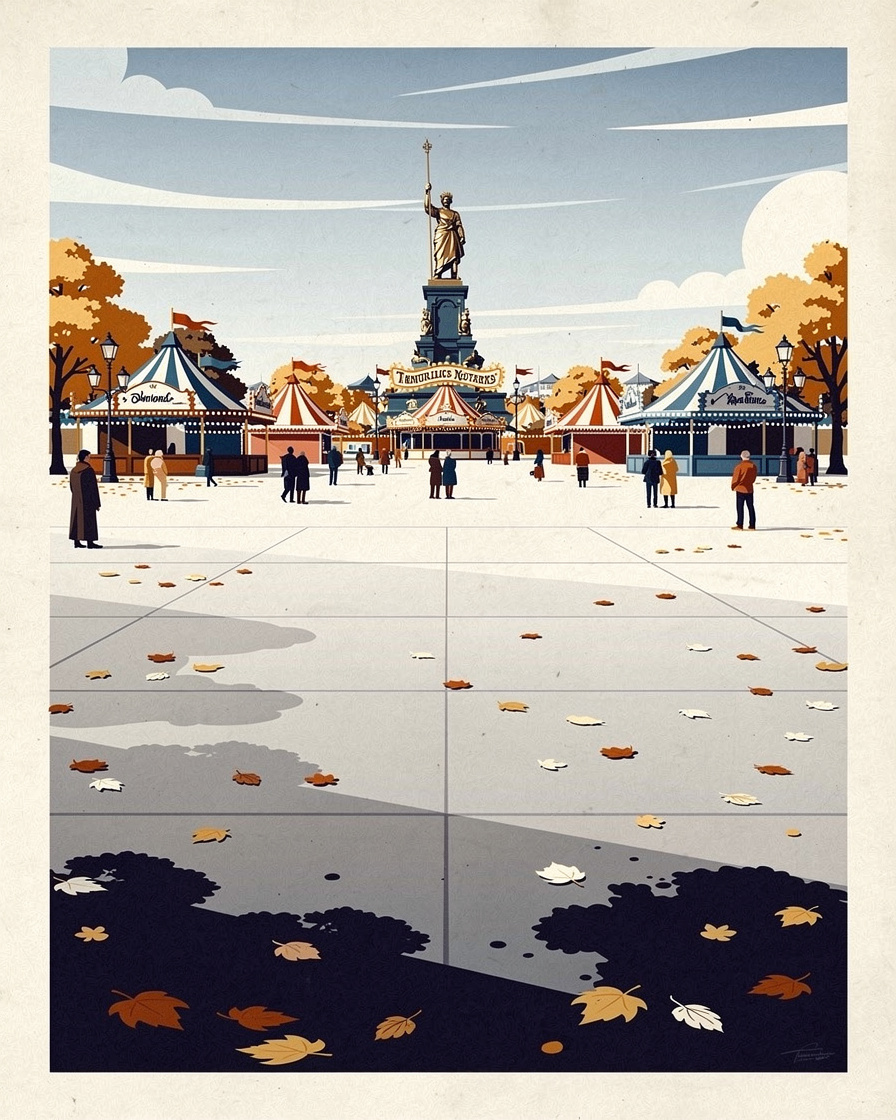
What does a realistic Wiesn day look like?
| Stage | Real duration |
|---|---|
| Hotel to the Wiesn (U-Bahn or tram) | 20 to 45 minutes, door to door |
| Entry, bag check | 10 to 30 minutes, depending on the crowd |
| A tent seat without a reservation, weekend afternoon | 45 to 120 minutes, or none at all |
| In the tent (food, one or two rounds) | 3 to 6 hours |
| Rides and walking between them | 1.5 to 3 hours |
| Back to the hotel, late evening | 30 to 60 minutes, crowded trains |
Altogether, a "full" Wiesn day comes to 8 to 12 hours door to door, an editorial estimate built from the stages above. On Saturdays the grounds are open from 9am to midnight, but beer service in the large tents ends at 10:30pm, which shapes a key part of the schedule.
What does a realistic old town day look like?
A walk taking in the Viktualienmarkt, Marienplatz, the Frauenkirche, the Residenz, Odeonsplatz and the English Garden can be done in one day, with real walking times rather than straight lines.
| Route | Walking time including stops |
|---|---|
| Marienplatz → Viktualienmarkt (including a browse round the market) | 45 to 90 minutes |
| Viktualienmarkt → Frauenkirche | 10 to 20 minutes |
| Frauenkirche (interior, depending on services) | 30 to 60 minutes |
| Residenz, a proper visit | 2 to 3.5 hours |
| Odeonsplatz → Eisbach wave → English Garden | 1 to 2 hours walking plus stops |
Without the Residenz the day comes to 5 to 7 hours, with a proper Residenz visit 7 to 9 hours. If you want to add the Theresienwiese on the same day, allow another 30 to 45 minutes just for the walk between Marienplatz and the Theresienwiese.
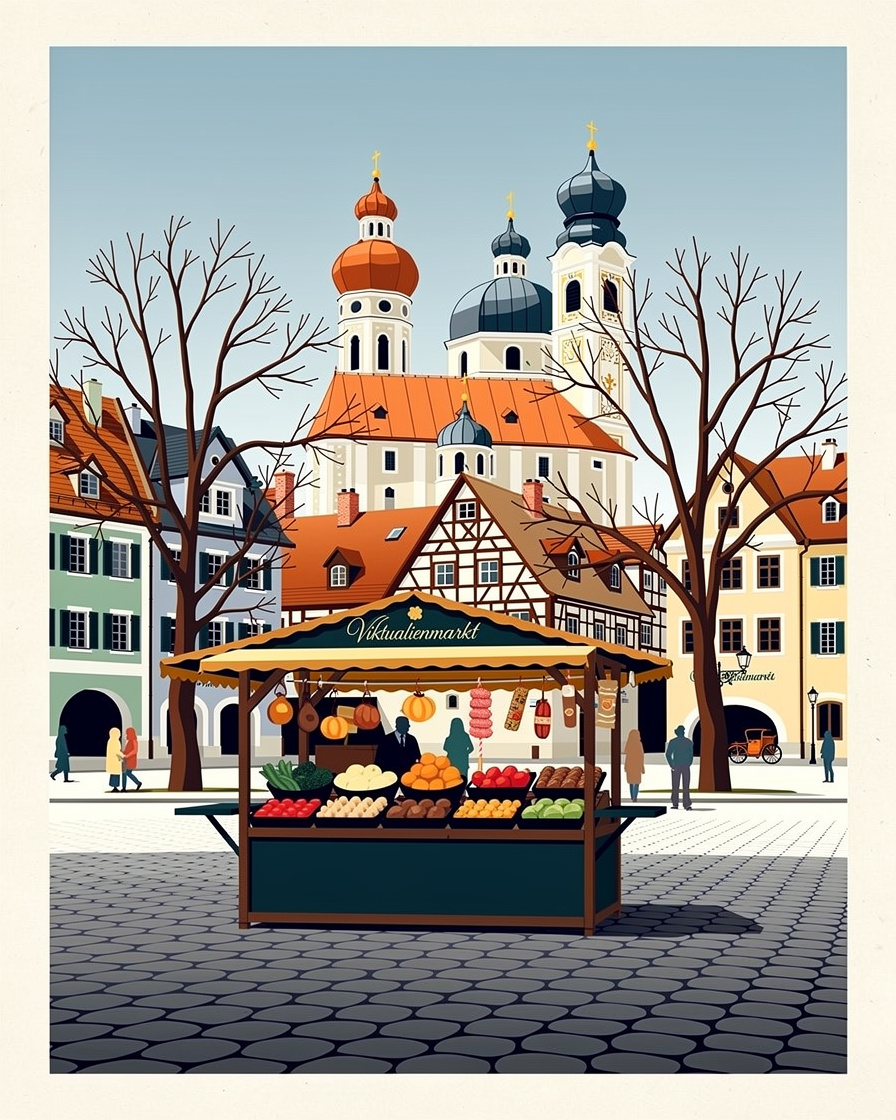
Where you sleep shapes both days: between Central Station (Hauptbahnhof) and Sendlinger Tor, both the old town and the Wiesn are within walking distance or on the U-Bahn. During the Wiesn that cost around €415 a night on average, and €70 to €180 a night out of season. The places to stay in Munich on Wiesn dates can be filtered by location.
Compare places to stay for the Wiesn →Affiliate link: a booking through this link supports the site, at no extra cost to you.What gets cut first when time runs short?
- A second museum on the same day. One big item done properly works better than two squeezed in.
- Sunday morning at a museum, if the museum is closed on Monday anyway. Many museums close on Mondays, others on Sundays: check the museum in question beforehand rather than relying on a standard pattern.
- A spontaneous switch to a second tent. Stay put after your reservation or the first seat you find, rather than hunting for a second tent in the afternoon.
- The walk between Marienplatz and the Theresienwiese, when it is already late. The official sources themselves recommend the U-Bahn or S-Bahn instead of the 30 to 45 minutes on foot.
The list of mistakes that cost the most time, with times and alternatives for a single weekend, is covered in more detail on the page about events in Munich this weekend.
What happens if it rains, or on Sunday?
The Wiesn stays open in the rain and the tents are dry, but the rides lose their appeal. The Oide Wiesn or a museum make a good rain plan, and the state museums charge only €1 entry on Sundays.
On Sundays most shops in Germany are closed, which general weekend guides rarely mention. If you want to go shopping, do it on the Friday or Saturday of your trip.
If you would rather not head back towards the Wiesn on your old town day, book a second, quieter room for the nights without a tent visit: not every night of the weekend has to be at Wiesn prices. The places to stay in Munich on Wiesn dates show where the price gap between nights is largest.
Compare places to stay for the Wiesn →Affiliate link: a booking through this link supports the site, at no extra cost to you.What does nobody publish for weekend planning?
- Real waiting times by the hour. Neither the city nor the tents publish a curve, only the three levels of the barometer.
- A list of museums closed on each day. Every museum publishes its own hours; there is no central overview for a single weekend.
- A per-person budget for a whole weekend. There are only individual prices, no official total.
These gaps are named here rather than filled with an invented figure.
Further reading
For a concrete weekend plan with a time budget for each item: events in Munich this weekend. For alternatives away from the Wiesn: what is on in Munich at the weekend.
For the Wiesn itself: Oktoberfest Munich 2026. For getting around: MVV tickets and zones.
Sources
Sources: official travel portals and city pages on Oktoberfest and routes through the centre (walking times and programme, 2025 and 2026), oktoberfest.de (opening hours, FAQ on pushchairs and luggage), munich.travel (2026 brochure). Walking times and time spent at each stop are editorial estimates where no official figure exists, and are marked as such.
Research as of 12 September 2026.
Frequently asked questions
Are two days enough for the Wiesn and the old town in Munich?
How long does a full Wiesn day really take?
What is the most common planning trap for a Munich weekend?
Where should you stay for a Wiesn weekend?
What can you do if it rains at the weekend?

Sophie Hartinger
Sophie worked at the front desk of a city-centre hotel for five years and answered the same questions about car parks and the U-Bahn every day. She writes the pages she would have liked to hand to her guests. She checks every price with the operator, never in a guidebook.